AI Worms: Cyber Threat to Backups
This new generation of malware poses entirely new challenges not only for systems, but especially for data backups.
What are AI worms?
AI worms are autonomous malicious programs that use artificial intelligence to dynamically adapt to their environment. Unlike conventional malware, they do not follow rigid patterns but continuously learn.
In practical terms, this means:
- They analyze networks in real time
- They detect and specifically bypass security mechanisms
- They autonomously optimize their propagation strategies
This capability makes them particularly dangerous—especially for critical infrastructures such as backup systems.
Why backups are being targeted
Backups have long been the last line of defense against data loss. That is exactly why they are now the focus of modern attacks.
AI worms follow a clear strategy:
First prevent recovery—then maximize damage.
Typical attack patterns:
- Identification of backup systems within the network
- Analysis of access controls and vulnerabilities
- Manipulation or deletion of backup copies
- Delayed activation to remain undetected
The result: In a worst-case scenario, no clean data is available anymore.
The new level of threat
What distinguishes AI worms from previous attacks is their adaptability.
While traditional malware is often detected through known signatures, AI worms can:
- Change their behavior
- Disguise themselves as legitimate processes
- Specifically outsmart security solutions
For companies, this means:
Traditional protection mechanisms are no longer sufficient.
How companies can protect their backups
Immutable Backups
Immutable backups ensure that data cannot be modified or deleted after it has been stored—even if admin accounts are compromised.
Physical and logical separation (offsite)
Backups should be strictly separated from production systems. This is the only way to prevent malware from spreading laterally.
Zero-trust approach
Every access to backup systems should be verified—regardless of whether it is internal or external.
Anomaly detection
Modern security solutions must be able to detect unusual activities at an early stage—such as abnormal deletion processes or access patterns.
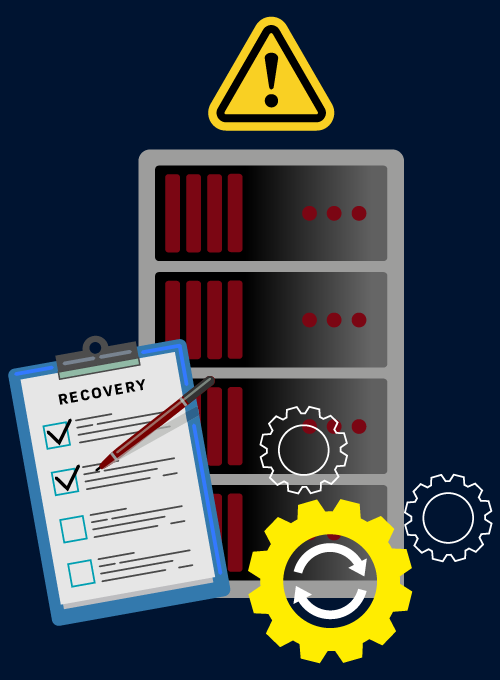
Regular recovery testing
A backup is only as good as its ability to be restored. Regular testing is essential to ensure readiness in an emergency.
AI worms mark a turning point in cybersecurity. They no longer just attack data—but specifically the ability to recover it.
For companies, this means:
Data protection must be rethought—secure, isolated, and immutable.
Because in a world where attacks are becoming smarter, defense must become smarter too.

 How may we help you?
 Get in touch by e-mail
 Convenient and simple